


PrescriptionClinician-reviewed
Weight loss with Koves
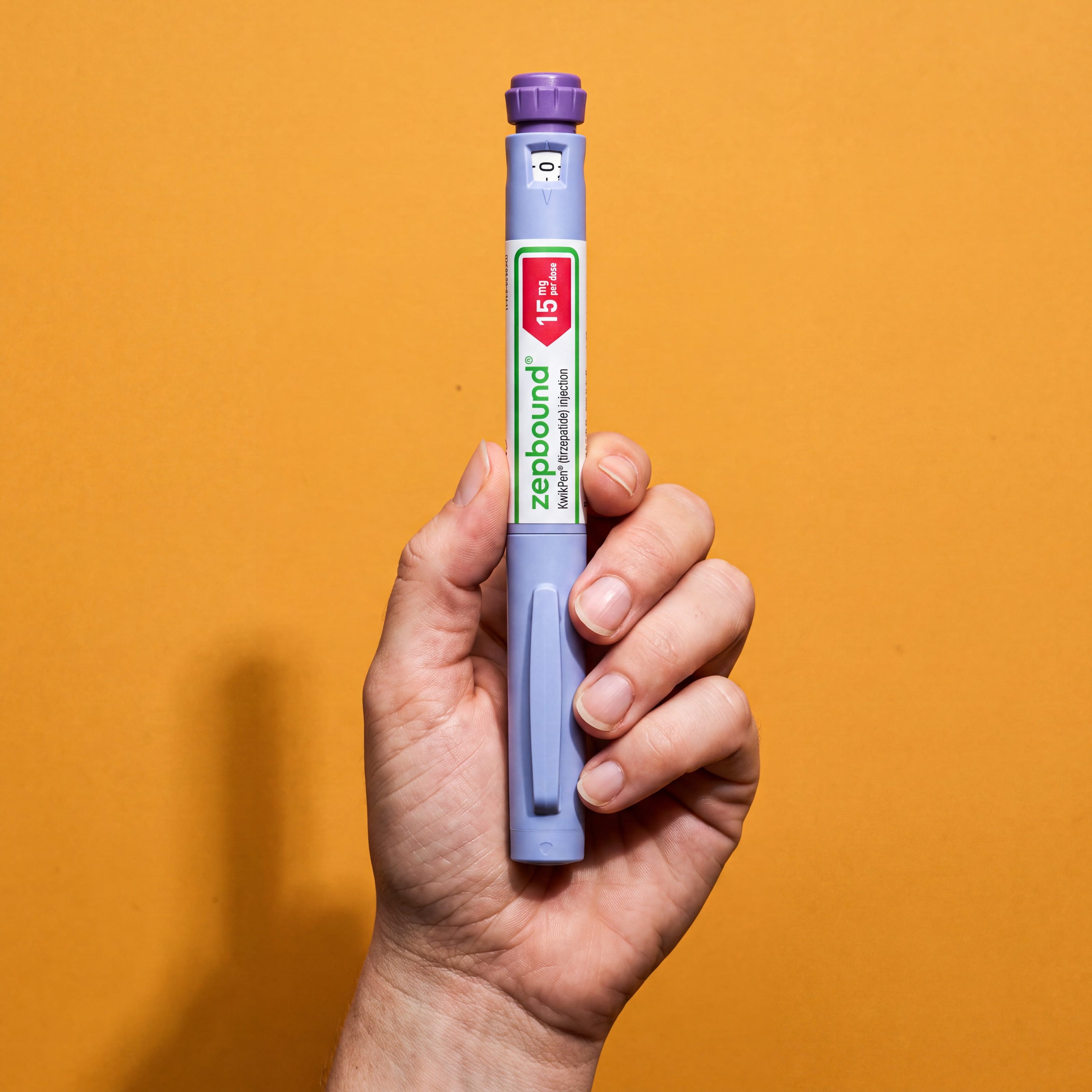
A licensed provider reviews your visit and prescribes a GLP-1 if it is appropriate. Dose changes, messaging and delivery are included.
See the treatmentAn estimate of how much energy your body uses in a day — the amount it spends staying alive, multiplied by how much you move. It is the figure every calorie target is built on.
You burn about
2,763kcal/day
2,600 – 2,999 kcal
A high daily burn, driven by body size, training volume or both. Training at this level is easy to under-eat for.
Predictive equations land within about 10% of measured expenditure for most people, and further out at the extremes of size and training. Treat the figure as a starting point you adjust from, not a measurement.
Nothing you entered above follows this link.
Not medical advice. This tool is for general information and does not diagnose any condition or replace a clinician. Everything you enter stays in your browser — Koves does not store it, receive it, or carry it into a visit.

Your daily energy expenditure is the sum of four things: the energy your body spends at complete rest, the energy it spends digesting what you eat, deliberate exercise, and everything else you do while awake — walking to the car, standing, fidgeting.
Resting metabolism is the largest share of it for almost everyone, usually 60 to 70 per cent. Exercise is the part people count and the smaller part of the total.
Body size moves it most — a larger body costs more to run, which is why the figure falls as you lose weight and why a target set in January stops working by March.
The equation cannot see your body composition. Two people of the same height, weight, age and sex get the same answer, whatever they are made of.
This is a predictive equation, not a measurement. Measuring expenditure properly needs indirect calorimetry or doubly labelled water. Mifflin–St Jeor was chosen here because it is the equation that holds up best against measured values in healthy adults — not because it is exact.
The useful way to use it: take the figure, eat at it for two or three weeks, weigh yourself on the same terms each time, and adjust from what the scale did rather than from what the equation said.
First the resting rate, in kcal per day, from the Mifflin–St Jeor equation:
Then that figure is multiplied by the activity factor — 1.2 at sedentary through 1.9 at athlete. A 35-year-old man, 178 cm, 84 kg, moderately active: resting rate 1,783, × 1.55 = about 2,763 kcal a day.
Imperial entries are converted to kilograms and centimetres first, so both toggles return the same answer.
A licensed provider reviews your visit and prescribes a GLP-1 if it is appropriate. Dose changes, messaging and delivery are included.
See the treatmentThat is your resting metabolic rate, and it is the first half of this calculation — for most adults it is 1,300 to 1,900 kcal a day and accounts for 60 to 70 per cent of the total. Set the activity level to sedentary and the figure you get is close to resting rate plus the cost of an ordinary inactive day.
Mifflin–St Jeor predicts measured resting expenditure more closely than the older Harris–Benedict equation in healthy adults, which is why it is the one used here. No predictive equation is accurate for an individual the way a measurement is — expect to be within about 10%.
Yes, but less dramatically than the claim usually implies. Muscle is more metabolically active than fat at rest, and the practical effect of more lean mass is mostly that you can train harder and move more — which is where the larger difference comes from.
Because there is less of you to maintain. A smaller body costs less to run, so the figure that produced a deficit at your old weight can be close to maintenance at your new one. Recalculating every 5 to 10 lb is the usual fix.
No. The calculation runs in your browser and the values are never sent to Koves or anyone else. They are not stored, and they do not follow you if you open the weight loss page from here.

The number is an estimate. What you do with it is a decision.
Start your online visit