




PrescriptionClinician-reviewed
Weight loss with Koves
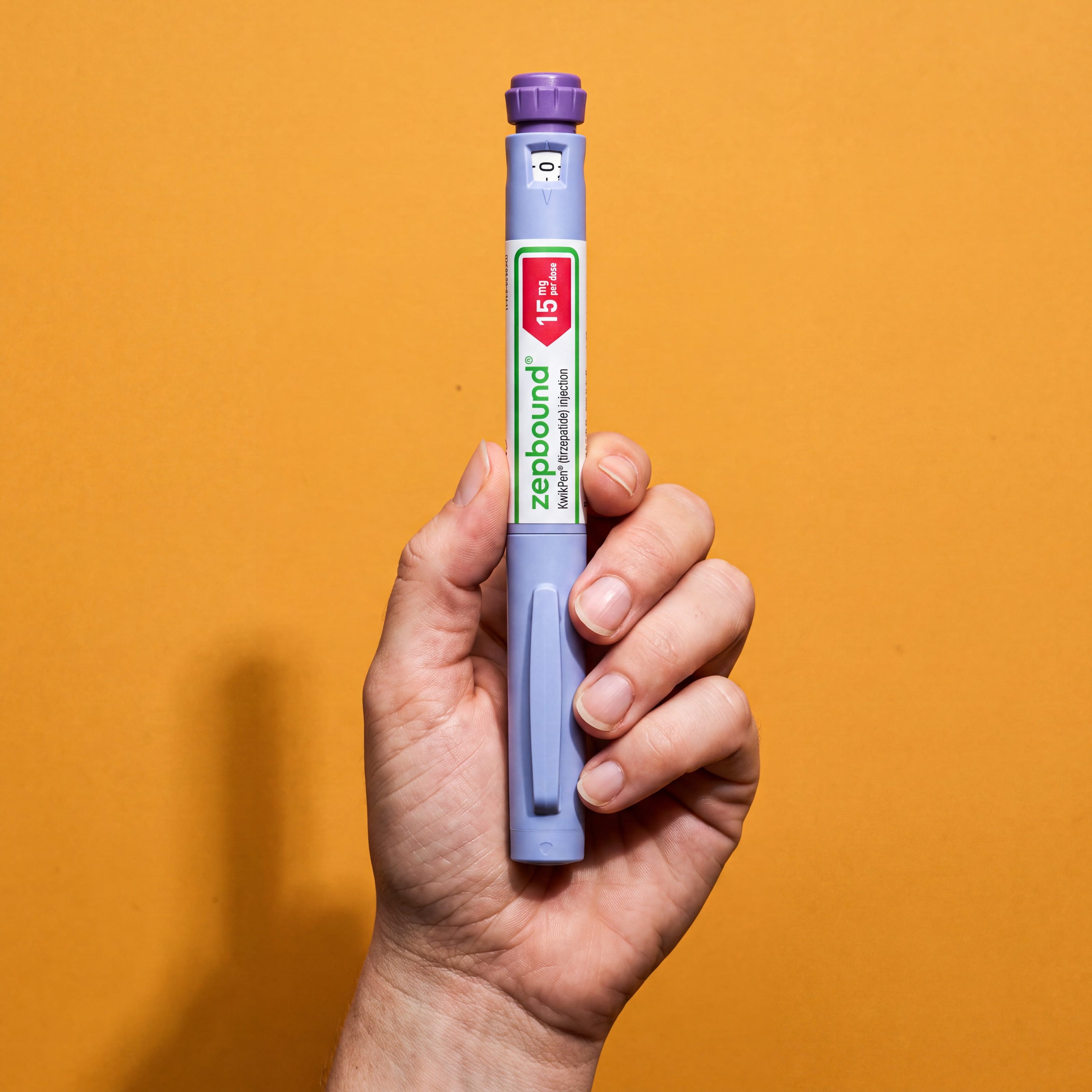
A licensed provider reviews your visit and prescribes a GLP-1 if it is appropriate. Dose changes, messaging and delivery are included.
See the treatmentWhat you would eat in a day to lose weight at a chosen rate — your maintenance figure minus the deficit you pick, never below the floor the guidelines set.
Eat about
2,263kcal/day
Maintenance 2,763 kcal/day · about 1 lb a week
Your target
This is your estimated maintenance figure minus the deficit you chose. Eat at it for two or three weeks and let the scale, not the equation, tell you whether it is right.
Rate is reported, not promised. Weight moves in a line on a spreadsheet and in steps on a scale — water, sodium, training and the menstrual cycle all move it by more than a day’s deficit.
Nothing you entered above follows this link.
Not medical advice. This tool is for general information and does not diagnose any condition or replace a clinician. Very low calorie intakes should only be undertaken with medical supervision. Everything you enter stays in your browser — Koves does not store it, receive it, or carry it into a visit.

A calorie deficit is eating less energy than you spend. Everything else — which foods, which pattern, which hours — is a means of arriving at that, not a substitute for it.
The conventional conversion is 3,500 kcal to a pound of body fat, so a 500 kcal daily shortfall is roughly a pound a week and 1,000 is roughly two. The guidelines that recommend that range recommend it because it is a rate people actually hold, not because it is the fastest arithmetic available.

This calculator will not print a target below 1,200 kcal a day for women or 1,500 for men. Those are the lower bounds in the US clinical guidelines for self-directed weight loss, and below them two things happen: hitting your protein and micronutrient needs stops being realistic, and adherence collapses long before the deficit has time to work.
If the deficit you chose would cross the floor, the figure shown is the floor and the reading says so. The remaining gap is closed by moving more or by accepting a slower rate — not by eating less than the floor.
Intakes below those figures are used in medicine, under supervision, with monitoring and supplementation. That is a clinical programme, not a setting on a calculator.

A deficit calculated today is correct for today. It stops being correct as you lose weight, because maintenance falls with body size — the target that produced a pound a week at the start can be close to maintenance 20 lb later.
The practical version: pick a deficit you can hold, recalculate every 5 to 10 lb, and judge it on three weeks of weights rather than three days.
Maintenance first — the Mifflin–St Jeor resting rate multiplied by your activity factor — then the deficit is subtracted and the result is held at the floor:
The rate printed under the figure is the deficit actually applied — after the floor — divided by 3,500 and multiplied by seven, which is why it falls short of the slider when the floor is doing the work.
A licensed provider reviews your visit and prescribes a GLP-1 if it is appropriate. Dose changes, messaging and delivery are included.
See the treatmentThe clinical guidelines put the usual range at 500 to 1,000 kcal a day, which works out to roughly one to two pounds a week. Larger deficits are not reliably faster in practice, because adherence and unplanned movement both fall as the deficit grows.
Because the guidelines it follows do not. 1,200 kcal for women and 1,500 for men are the lower bounds for self-directed weight loss — below them, protein and micronutrient intake stop being achievable from food and the diet stops being one people stay on. Lower intakes belong under medical supervision.
A GLP-1 works largely by reducing appetite, so the deficit tends to happen without counting — which is also why protein and resistance training matter on it, since some of the weight lost is lean mass. Whether a GLP-1 is appropriate is a decision for a licensed provider after reviewing your history.
Give it three weeks before changing anything, weighing on the same terms each time. If the average has not moved, the likeliest explanations are that maintenance was over-estimated or that intake is higher than logged — drop the target by about 10% rather than slashing it.
No. The calculation runs in your browser and the values are never sent to Koves or anyone else. They are not stored, and they do not follow you if you open the weight loss page from here.

A deficit is arithmetic. Keeping one is not.
Start your online visit