




Skip to content
Skip to content
Free expedited shipping on orders over $150

RxCompounded

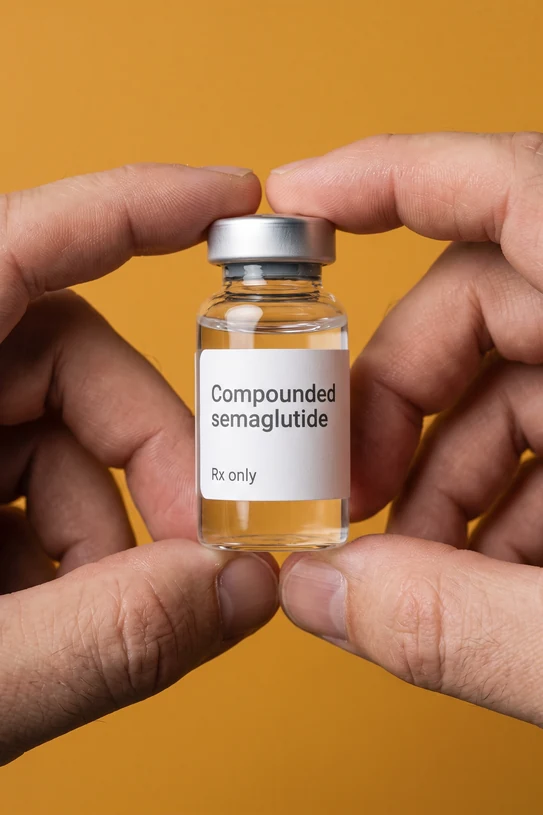
Compoundedsemaglutide

[AJ to confirm]

  • Contains semaglutide, prescribed for weight management if appropriate

  • Compounded by a state-licensed pharmacy — no FDA premarket review

  • Clinician-guided treatment with ongoing support

A compounded GLP-1 medication containing semaglutide, prepared by a state-licensed pharmacy and prescribed for weight management when a licensed clinician judges it appropriate. It is a weekly injection from a vial, and the amount you take is set and adjusted by your provider over time rather than fixed in advance.

No membership feeFree, discreet delivery

How to take it?

Use your treatment exactly as directed by your licensed provider. Your provider will determine the appropriate dose, schedule, and method of use based on your health history and treatment plan. You’ll receive medication-specific instructions with your treatment, and your care team is available through secure messaging if you have questions along the way.

What are the possible side effects?

This is a compounded medication. It is prepared by a state-licensed pharmacy and has not undergone FDA premarket review: the FDA does not review compounded preparations for safety, effectiveness or quality in the way it reviews approved drug products, and a compounded preparation should not be assumed to be therapeutically equivalent to any approved product. Side effects vary from person to person. Semaglutide commonly causes nausea, diarrhea, vomiting, constipation, stomach pain, headache, fatigue, indigestion, dizziness, bloating, burping, gas, and reflux. More serious risks can include pancreatitis, gallbladder problems, kidney injury related to dehydration, severe gastrointestinal reactions, allergic reactions, increased heart rate, and diabetic retinopathy complications in people with type 2 diabetes. Semaglutide carries a boxed warning regarding the potential risk of thyroid C-cell tumors and should not be used in people with a personal or family history of medullary thyroid carcinoma or MEN 2. Semaglutide delays gastric emptying, which can affect the absorption of other oral medicines and raises the risk of retained gastric contents and pulmonary aspiration during general anesthesia or deep sedation — tell every provider treating you, including your anesthesiologist and your surgeon, that you are taking it. Your licensed provider will review your medical history, discuss risks and contraindications, and provide medication-specific safety information before prescribing. Seek prompt medical care for severe or concerning symptoms.

Talk to your provider about any side effects you experience.

What does Koves offer?

  • Protocols built around you, with dose adjustments if needed

  • Fast online visit, reviewed by a licensed provider

  • 24/7 secure messaging plus check-ins with your care team

  • Medication delivered straight to your door — no pharmacy lines

  • Every plan includes supplies, free shipping, prescription if eligible, and ongoing medical support

Pricing to confirm. Compounded medications do not undergo FDA premarket review and require a prescription from a licensed provider who decides whether treatment is appropriate.

Prepared and dispensed by an independent state-licensed pharmacy. [AJ to confirm: VialsRx — legal name and 503A/503B facility class outstanding from Bask.] Koves does not compound, manufacture or dispense medication.


What it is. What it is not.

Diagram: semaglutide docking into its receptor

It contains semaglutide.

Semaglutide is a GLP-1 receptor agonist. GLP-1 is a hormone the gut releases after eating, and the molecule makes that fullness signal arrive sooner and last longer.

Diagram: a mortar and pestle beside a vial — the compounding pharmacy

It is compounded, not approved.

A state-licensed pharmacy prepares it. The FDA does not review compounded preparations the way it reviews approved drug products, and it should not be assumed to be therapeutically equivalent to one.

Diagram: a chart and a stethoscope, one dose marked and stepped up

Your provider sets the amount.

There is no fixed schedule published here. A licensed clinician decides where you start and changes it based on how you respond.

Diagram: a calendar with one day marked, beside a vial

One injection a week.

A fixed day, whenever suits. In published trials of semaglutide, adults without diabetes lost substantial body weight over 68 weeks.1

1. Wilding JPH, et al. Once-Weekly Semaglutide in Adults with Overweight or Obesity. New England Journal of Medicine, 2021 (STEP 1). See source

Figures describe published trials of the molecule and the study populations enrolled in them. Compounded preparations were not studied in those trials, have not been compared with any approved product, and results vary from person to person. Koves is a technology platform that facilitates access to independent licensed medical providers and does not practice medicine, compound or dispense. Treatment decisions are made solely by independent licensed providers following a clinical evaluation. Individual results may vary.

One price.Everything in it.

Along with the medication, if prescribed, you get:

  • A licensed provider who reviews every visit
  • Dose changes whenever your provider judges they are needed
  • 24/7 secure messaging with your care team
  • Free, discreet delivery in plain packaging
  • No membership fee

Compounded prescription products require an online consultation with a licensed clinician who will determine whether a prescription is appropriate.

Your provider sets the starting amount and adjusts it over time based on how you respond. Dosing is not published here because it is individual and clinical.

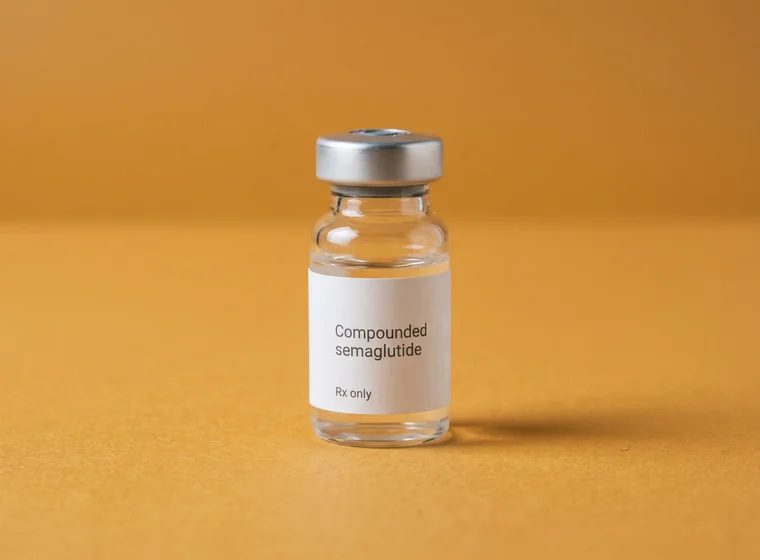
A single vial of compounded semaglutide small in a wide amber frame, the ground falling into shadow

A provider decides,not a price list.

Whether a compounded medication is appropriate for you is a clinical judgment, made by the licensed clinician who reviews your visit.

Two compounded options.Which one is yours?

Both are compounded preparations dispensed by an independent state-licensed pharmacy. Neither has undergone FDA premarket review, neither has been compared with the other in a clinical trial, and which one is appropriate — if either is — is your provider’s decision. Prepared and dispensed by an independent state-licensed pharmacy. [AJ to confirm: VialsRx — legal name and 503A/503B facility class outstanding from Bask.] Koves does not compound, manufacture or dispense medication.

Both are compounded GLP-1 medications prescribed for weight management. A provider reviews your visit and decides which, if either, fits.

A vial of compounded semaglutide standing on amber seamless

Compounded semaglutide

Form
Injectable vial
How to take
Weekly injection
Contains
Semaglutide
Dosing
Set by your provider

adjusted over time

Prescribed for
Weight management
Starts at
[AJ to confirm]
A vial of compounded tirzepatide standing on amber seamless

Compounded tirzepatide

Form
Injectable vial
How to take
Weekly injection
Contains
Tirzepatide
Dosing
Set by your provider

adjusted over time

Prescribed for
Weight management
Starts at
[AJ to confirm]

Frequently asked questions about compounded semaglutide

What is a compounded medication?

One prepared by a licensed pharmacy for an individual patient, rather than manufactured and sold as an approved drug product. Compounded preparations do not undergo FDA premarket review: the agency does not review them for safety, effectiveness or quality in the way it reviews approved products, and they should not be assumed to be therapeutically equivalent to one.

Who prepares it?

An independent state-licensed pharmacy prepares and dispenses it. Koves does not compound, manufacture or dispense medication — it is a technology platform that connects you with independent licensed providers and pharmacies.

How is it taken?

One injection a week, from a vial, on a day you pick. Your provider sets the amount you start on and adjusts it over time based on how you respond, so there is no schedule published here to read ahead of that conversation.

What does semaglutide actually do?

Semaglutide is a long-acting GLP-1 receptor agonist. GLP-1 is a hormone your gut already releases after eating; the molecule makes that fullness signal arrive sooner and last longer, so appetite falls.

What are the common side effects?

Nausea, diarrhoea, vomiting, constipation, stomach pain, headache and fatigue are the frequent ones. Serious risks include pancreatitis, gallbladder problems and kidney injury from dehydration. Semaglutide carries a boxed warning about thyroid C-cell tumours. Your provider goes through the full list before prescribing.

Who should not take it?

Anyone with a personal or family history of medullary thyroid carcinoma, or with MEN 2. Tell every provider treating you — including your anesthesiologist and surgeon before any procedure — that you are taking a GLP-1 medication, because it delays gastric emptying.

What happens if I stop?

Appetite generally returns to where it was, and weight often follows. This is a long-term treatment, and stopping is a conversation to have with your provider rather than a decision to make alone.

Someone caught mid-movement in warm daylight at home

Turns out…

the next step was closer than it felt.

Compounded prescription products require an online consultation with a licensed clinician who will determine whether a prescription is appropriate. **Compounded medications do not undergo FDA premarket review.** The FDA does not review compounded preparations for safety, effectiveness or quality in the way it reviews approved drug products. A compounded preparation should not be assumed to be therapeutically equivalent to any approved product. Whether one is appropriate is decided solely by the treating provider. Rx required.